I passed the first two weeks or so I was in Buenos Aires in a hostel in the neighborhood of San Telmo. Famous for it's Sunday antiques fair and for claiming a strong tradition of small tango clubs (milongas) and historic cafes, it's a pretty fun neighborhood. While some of my porteño friends claim that they can't stand San Telmo, I like it. The neighborhood is (forgive me for using this word!) gritty, with narrow streets, old houses , antique shops and small boutiques and art galleries (and a reputation for being somewhat dangerous for tourists after dark). It sits right below the downtown, with it's most well-known street, Defensa, running straight down from the Plaza de Mayo to La Boca. If you walk toward the river you end up in the upscale neighborhood of Puerto Madero and will eventually run into the natural reserve that runs along one section of the river. Walking away from the river you run into 9 de julio, one of the widest streets in the world. If you cross 9 de julio (which is impossible to do in the span of one red light unless you RUN) you end up in Monserrat and eventually hit the area around the Congress building.
I stayed at this same hostel six years ago, when I was doing research for my masters thesis. It's called Sandanzas (I'm including a link to the website here because I really do think it's a great spot). It wasn't quite like deja vu to be there again, but it was close. I still remember the walk from the hostel to the San Juan subte (subway) station that took me to the Library of Congress newspaper archives. The neighborhood has changed somewhat from what I remember...there are more empty buildings and "for sale" signs, more graffiti, more trash. Not that I remember Buenos Aires as a terribly clean city. Beware of dog poop landmines on the sidewalks all you who want to walk the streets of Buenos Aires someday! The first time I stayed in San Telmo the antique market filled the Plaza Dorrego and spilled out into a few surrounding streets, with the antiques concentrated in the plaza and booths of handicrafts and hand-made jewelry lining the sidestreets. Now all of Defensa Street is closed on Sundays, with thousands of tourists and locals wandering past booths that are open well into the evening. Only the traditional antique booths close at dusk, the owners packing away chandeliers and goblets, crystal decanters and antique telephones, costume jewelry and gemstones alike into cardboard boxes and hauling them back to the stores that line Defensa. During the day the whole plaza looks like a giant yard sale for the rich, with the contents of mansions laid out on plywood tables. I'm sure most of it is junk, really, but it is impressive none-the-less.
I spent much of the two weeks in San Telmo searching for an apartment. Since I was planning on staying for a little over two months I wanted to have an apartment within walking distance to the Library of Congress. Hostel living is not really that great if you're looking to actually get some work done. But I will admit to some touristy activities while at the hostel. I spent a lovely evening eating the most delicious steak that has ever graced my taste-buds and conversing with a Californian and an Irishman about energetic healing, took a tango class with a bunch of rowdy Basques, got my hair cut, toured the cemetery in Recoleta for the fifth time, chatted well into the evening with the owners of the hostel and slept long passed when I should have hauled myself out of bed almost every morning. It pretty close to being on vacation.
The night of tango lessons with the rowdy Basques deserves a more detailed explanation. One of the last nights I was in the hostel a group of six Basques (five men and one woman) checked in for a few days. They were on their way back to Spain after coming to Argentina for a friend's wedding. We talked them in to taking a tango class that evening despite the fact that men would far out-number women, a situation that hardly ever happens in any kind of partner-dancing class (at least in my experience). I have often had to dance with another woman in a tango or samba class, but never have I seen the men paired with other men. The Basque guys just jumped right in with no thought as to whether the gender of their partner had any effect on their images of masculinity, an act which I'm not sure would be replicated by most straight men from the US. And these guys were straight. It was probably the strangest but most entertaining tango class I've ever had the pleasure to be a part of. These guys were a riot. We all ended up at a milonga that night set up at a local cultural center a few blocks away, and one of the guys kept trying to convince me he was going to take me out to dance in the crowd of obviously experienced tango dancers even though he had never even heard tango music before that night. We got as far as half-way to the dance floor before he finally chickened-out, shocked that I actually took him up on his offer.
I finally moved my stuff to my new apartment after almost two weeks in the hostel. I looked at maybe five apartments, most of them in the Congreso and Monserrat neighborhoods. In the end I picked a house just off 9 de julio. I'll fill you all in on my B.A. apartment in the next installment...
Tuesday, July 27, 2010


Tuesday, July 20, 2010
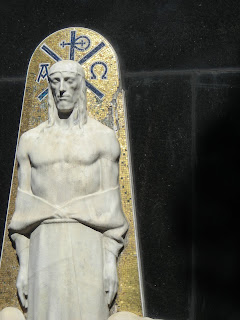
Recoleta Cemetery
My camera had an unfortunate accident involving a head-on collision with cement while I was in Buenos Aires. But I was able to take some photos of the cemetery in Recoleta before the poor camera's untimely demise. Rest in peace, little Nikon. You did all point and shoot cameras proud. Here is a tribute to your last days....


Buenos Aires
It's not as if you won't notice after reading even a little of this post, but I love Buenos Aires. I love that there are lots of independent theaters and art galleries and cafes with live music. Bookstores abound and they even sell books at newspaper stands. Not just pulp novels, but Borges, Cortázar, Saramago, García Márquez. You can go to a milonga in San Telmo or Palermo or Almagro and dance tango until dawn, wander the streets of Recoleta and gawk at the luxurious homes and shops, buy mouthwatering choripan from street vendors in Puerto Madero for the price of a coffee back home, gorge yourself on steak in restaurants both pricey and cheap, sip a glass of house wine that sells for less than a bottle of Coca-Cola, picnic in the parks in Palermo, visit the Japanese gardens, or simply sit in one of the ubiquitous resto-bars that grace what seems like every street corner and watch the people walk by. Just thinking about empanadas for lunch, facturas and yerba mate at 5:00 with friends and a late dinner makes me want to get on a plane right now and head further south. Ok, that's me waxing a bit poetic. Like I said, I love Buenos Aires. Say what you like about ridiculously enormous cities, the crowds, the smell, the noise, the traffic, the pollution, the crime, but I would still jump at any opportunity that comes my way to spend a little more time in Buenos Aires.
I'm not really sure where to start with this part of my travels. This blog has been neglected of late, I know, and any kind of chronological order has been shot to hell. So maybe an episodic approach might be a better tack to choose. So for the sake of just getting this post published, here's a story, an episode if you will. Otherwise I'll get so lost in remembering things in order that I'll never get it written down. I'll call this one "Blind Theater."
You could, I suppose, translate teatro ciego as "theater of the blind" as well, but it doesn't really sound as nice. I like the literal translation of "blind theater" better. In the neighborhood of Abasto, close to the Carlos Gardel Museum, stands the Centro Argentino de Teatro Ciego, a nondescript theater that produces shows that are made for and largely by the blind. But these plays and other theater productions are not only for the blind but place the seeing public in the shoes of a blind "spectator." The shows are put on in the dark and incorporate not only sound but also smell and touch.
One rainy Saturday night a Spanish friend of mine called me late to see if we could snag some tickets to the late performance of the new play Luces de libertad. Argentina had recently celebrated the 200th anniversary of the May Revolution, the revolution that sparked the war that eventually led to the independence of the majority of Latin American countries. The play tells the story of a black slave in Buenos Aires (yes, there were slaves in Buenos Aires, although there are very few families of African descent in Argentina now) who gets romantically involved with a young criollo man who is wrapped up in the May Revolution. I wasn't all that excited about getting dressed up and going out in the rain that evening, but my friend harassed me into venturing out and practically dragged me to the theater. She even had the nerve to call the theater to see if they would delay the start of the show by five minutes so we could make it before the play began. And the theater agreed!
So how do you put on a play for the blind? Or that even goes beyond this and strives to give the sighted audience an experience that mirrors the feelings of being blind? We were led into the theater itself by staff members, each person placing her or his hands on the shoulders of the person in front of him or her. The theater is entirely dark (and having been in true dark inside caves previously, I can tell you that it was indeed entirely dark) and we were helped into our chairs by the staff of the theater. Or perhaps even by the actors themselves, I'm not sure. One of the actors warned us that it can be disorienting at first to be in the dark, in the complete dark without being able to see even shadows of objects. And he warned us sternly of not turning on cell phones or illuminating watches during the performance. And at some point, without warning, the play began. I won't really go into the plot more than I already have, but I will say it was well written. They did an incredible job of describing things in such as way that you could imagine it in your head but without straying from the norms of conversational speech. It didn't sound false or contrived when characters gave the audience and idea of what things looked like, what sounds meant, etc. even though in a play for the sighted these things might be left unsaid.
The play integrated sound, touch and smell with a deft touch. At first it was strange, but after a few minutes I began to imagine in my head the actors and staging and sets and costumes. I began to forget I couldn't actually see anything. It was eerily similar to how I imagine things while I'm reading a novel. Nothing was very defined or sharp or terribly detailed, more like an impressionist painting rather than a realist or even surrealist one. But for me, these images supplanted any awareness I had of being seated in a chair in a dark room. When the characters were washing clothes, you could hear the water and smell the soap. When one was cooking, you could smell the burnt sugar of the dessert she was making. The actors used the entire room as their stage and their voices appeared in front, behind and to the sides, as if you were inside the play and not a spectator. Actors would softly bump into the audience members, rubbing a leg while walking past with their own legs or lightly placing a hand on a shoulder or arm. The most impressive moment for me was when two of the characters swam across a river. Not only could you hear the sounds of the water splashing and the labored breathing of the swimmers, but you could also feel the splash of water and smell the riverbanks. And the sounds and splashed moved across the room, giving the impression of movement, as if these actors were truly swimming across a river that had magically appeared at our feet. I was impressed at the ingenuity of the whole play, but this scene left me dumbstruck. At the end of the play the lights slowly came up and we were able to see for ourselves the actors who we had been listening to for the past hour and a half. I had imagined a cast of a least ten or fifteen, but eight actors stood before us at the end, dressed in plain clothes. According to the playbill, over half the actors are themselves blind. It took me at least twenty minutes into the play to realize what kind of dedication it must take to learn a play like this, since it is not only the audience but also the cast that is in the dark. There are no visual marks to follow, the actors are not wearing night-vision goggles to know where to walk or where to stop or how to maneuver among the audience members. It must be like memorizing a dance, three steps to the right, two to the left, run six steps ahead and fall to the ground. I wonder if at some points the actors were having conversations with themselves and not with other actors playing the second part in a discussion.
I have no idea if there are other blind theaters out there. Surely in a city like New York or London or Paris or Madrid there may be. But if you happen to find yourself in Buenos Aires I highly recommend attending one of the plays put on at this little theater in Abasto. You won't regret it.
I'm not really sure where to start with this part of my travels. This blog has been neglected of late, I know, and any kind of chronological order has been shot to hell. So maybe an episodic approach might be a better tack to choose. So for the sake of just getting this post published, here's a story, an episode if you will. Otherwise I'll get so lost in remembering things in order that I'll never get it written down. I'll call this one "Blind Theater."
You could, I suppose, translate teatro ciego as "theater of the blind" as well, but it doesn't really sound as nice. I like the literal translation of "blind theater" better. In the neighborhood of Abasto, close to the Carlos Gardel Museum, stands the Centro Argentino de Teatro Ciego, a nondescript theater that produces shows that are made for and largely by the blind. But these plays and other theater productions are not only for the blind but place the seeing public in the shoes of a blind "spectator." The shows are put on in the dark and incorporate not only sound but also smell and touch.
One rainy Saturday night a Spanish friend of mine called me late to see if we could snag some tickets to the late performance of the new play Luces de libertad. Argentina had recently celebrated the 200th anniversary of the May Revolution, the revolution that sparked the war that eventually led to the independence of the majority of Latin American countries. The play tells the story of a black slave in Buenos Aires (yes, there were slaves in Buenos Aires, although there are very few families of African descent in Argentina now) who gets romantically involved with a young criollo man who is wrapped up in the May Revolution. I wasn't all that excited about getting dressed up and going out in the rain that evening, but my friend harassed me into venturing out and practically dragged me to the theater. She even had the nerve to call the theater to see if they would delay the start of the show by five minutes so we could make it before the play began. And the theater agreed!
So how do you put on a play for the blind? Or that even goes beyond this and strives to give the sighted audience an experience that mirrors the feelings of being blind? We were led into the theater itself by staff members, each person placing her or his hands on the shoulders of the person in front of him or her. The theater is entirely dark (and having been in true dark inside caves previously, I can tell you that it was indeed entirely dark) and we were helped into our chairs by the staff of the theater. Or perhaps even by the actors themselves, I'm not sure. One of the actors warned us that it can be disorienting at first to be in the dark, in the complete dark without being able to see even shadows of objects. And he warned us sternly of not turning on cell phones or illuminating watches during the performance. And at some point, without warning, the play began. I won't really go into the plot more than I already have, but I will say it was well written. They did an incredible job of describing things in such as way that you could imagine it in your head but without straying from the norms of conversational speech. It didn't sound false or contrived when characters gave the audience and idea of what things looked like, what sounds meant, etc. even though in a play for the sighted these things might be left unsaid.
The play integrated sound, touch and smell with a deft touch. At first it was strange, but after a few minutes I began to imagine in my head the actors and staging and sets and costumes. I began to forget I couldn't actually see anything. It was eerily similar to how I imagine things while I'm reading a novel. Nothing was very defined or sharp or terribly detailed, more like an impressionist painting rather than a realist or even surrealist one. But for me, these images supplanted any awareness I had of being seated in a chair in a dark room. When the characters were washing clothes, you could hear the water and smell the soap. When one was cooking, you could smell the burnt sugar of the dessert she was making. The actors used the entire room as their stage and their voices appeared in front, behind and to the sides, as if you were inside the play and not a spectator. Actors would softly bump into the audience members, rubbing a leg while walking past with their own legs or lightly placing a hand on a shoulder or arm. The most impressive moment for me was when two of the characters swam across a river. Not only could you hear the sounds of the water splashing and the labored breathing of the swimmers, but you could also feel the splash of water and smell the riverbanks. And the sounds and splashed moved across the room, giving the impression of movement, as if these actors were truly swimming across a river that had magically appeared at our feet. I was impressed at the ingenuity of the whole play, but this scene left me dumbstruck. At the end of the play the lights slowly came up and we were able to see for ourselves the actors who we had been listening to for the past hour and a half. I had imagined a cast of a least ten or fifteen, but eight actors stood before us at the end, dressed in plain clothes. According to the playbill, over half the actors are themselves blind. It took me at least twenty minutes into the play to realize what kind of dedication it must take to learn a play like this, since it is not only the audience but also the cast that is in the dark. There are no visual marks to follow, the actors are not wearing night-vision goggles to know where to walk or where to stop or how to maneuver among the audience members. It must be like memorizing a dance, three steps to the right, two to the left, run six steps ahead and fall to the ground. I wonder if at some points the actors were having conversations with themselves and not with other actors playing the second part in a discussion.
I have no idea if there are other blind theaters out there. Surely in a city like New York or London or Paris or Madrid there may be. But if you happen to find yourself in Buenos Aires I highly recommend attending one of the plays put on at this little theater in Abasto. You won't regret it.
Sunday, May 16, 2010
San Salvador
So let's travel back in time a bit, dear readers. Put yourselves two months or so in the past and journey with me to the city of San Salvador, country of El Salvador. I jumped on a bus (which, by the way, was an adventure in itself) to San Salvador from Guatemala City sometime in early March so I could get cracking at the newspaper archives at the National Library and start making contacts with journalists, public opinion people, etc. Getting from Antigua to San Salvador was not as easy as you would think, since most of the direct buses from Antigua (well, all really, or at least all that I asked) don't actually go to the capital but instead take you directly to the beach. So I had to catch the bus from Guatemala City early in the morning, a feat which was preceded by at 3 am walk through Jocotenango and Antigua with my enormous backpacker backpack (hehe) to get to where the shuttle to Guate would actually pick me up. Stupid shuttle drivers who won't make the extra five minute drive to Jocotenango! The bus ride to San Salvador from Guatemala City can last between four and six hours, depending on traffic and how long it takes to cross the border. The border crossing was rather anticlimactic and felt a little like crossing the border into Canada from the US. Ok, much more low-tech, but still, very low-key. They didn't even stamp my passport! All I have is the exit stamp from Guate to prove that I even left the country. A heads up for anyone who wants to stay more than 90 days in Guatemala...leaving to spend time in El Salvador or Honduras or Nicaragua still counts towards your 90 days, so head toward Mexico or book a trip to Costa Rica or Panama.
I thought San Salvador would be a lot more like Guatemala City than it was. There are, of course, many similarities...they are more alike than say, Boston and Guatemala City. But you can definitely tell you're not in Guatemala anymore. The most obvious clue, of course, is you don't see people walking around in the traditional indigenous dress that is ubiquitous in Guatemala. El Salvador does not have the same indigenous population that Guatemala does. Also, the Salvadoran accent is different than in Guatemala, as is (of course) the slang used. I had to learn or at least become familiar with a whole new range of slang...it got a little confusing! I spent most of my time staying in a hostel in the colonia Centroamerica, a neighborhood that is relatively safe (but not as safe or ritzy as the Colonia Escalon neighborhood where many of the slightly more expensive hostels and guest houses are located) and that is close to the MetroCentro mall. Which, apparently, is the biggest mall complex in Central America. The thing is enormous. I later learned that to get around, especially on buses, people tend to navigate around landmarks and malls. So you can tell people that you live near the naked lady (a statue of a naked woman) or the naked man (a mural of a naked man on the side of an art museum next to the Sheraton Hotel) or near MetroCentro or one of the other big malls. The shopping centers are the new big thing in San Salvador apparently (well, relatively new). Don't picture them as a mall in the US...things change in warm climates (are malls different in California? I have no idea). This is more of an open-air thing, with shops facing plazas or patios with fountains and seating and cafe's etc. And this is where much of the partying happens at night...bars and restaurants in these shopping centers are the hip place be if you are part of the young Salvadoran middle and upper class, somewhat replacing the bars in the Zona Rosa as the cool nightspots. Or so my friends tell me. So if you want to go out in San Salvador you head for a mall....or the beach, which is a thirty to forty minute drive. Friday nights are nuts for driving down to the coast, especially in tourist towns like El Tunco (where we ended up one Friday night). It seems like half the city of San Salvador heads to the beach to party on the weekends. Kind of like what happens in Antingua on the weekends (and Tuesday nights, haha), but a little less family friendly in some places. And with more of a beachy atmosphere, of course.
I'll skip over most of the boring bits of my trip to San Salvador. A lot of it was spent sitting in the basement of the National Library, where the newspaper archives are kept. The National Library takes up one of the sides of the main plaza in the downtown, alongside the Presidential Palace and across from the National Cathedral. The main librarian at the archives is this skeezy guy that couldn't stop himself from hitting on me...I have to admit it was a little creepy. He had no problem sitting down for a chat every once in a while while I was working and at one point told me this long story about the first woman with blue eyes he had ever met, who was a nurse from the States who had come to his village to give vaccinations. He told me he fell in love with her and went back everyday to try to get a second vaccination so he could see her again. I got this story one day after he noticed I have blue eyes. There wasn't much in the way of noise control in the archives...the librarians would talk loudly on the phone or chat with each other or with other patrons. I finally ended up going to the library with my ipod and headphones in an attempt to deter the librarian from talking to me and to drown out the noise of conversation.
Guate can ( The downtown of San Salvador is not really all that much like the downtown in Guatemala. Ok, for a gal from the States I guess it is pretty similar, but it felt completely different to me. Inyou don't see that many stalls selling blackmarket goods once you get off the Sexta Avenida (6th Ave.), the main plaza is enormous and the central market is mostly underground. In San Salvador stalls selling food, clothes, pirated cds and dvds, and really anything else youthink of fill the streets. There are streets that I figure must have been built to hold twolanes of traffic that are crowded and narrow and barely let buses through due to the amount ofstreet vendors. A Salvadoran acquaintance told me this is partly due to the world economicrecession, since there is little hope for the average Salvador to get a job with a living wage once they've lost theirs and many more have resorted to the informal sector to support theirfamilies than in the past. Walking around in downtown San Salvador is quite an experience forsomeone not used to this kind of thing. Being a blond, tall, blue-eyed foreigner in this part oftown definitely made me stand out. The only time I spotted any other obvious foreignersobviously I'm not counting foreigners who are from other Central American countries) was during the commemoration of the thirtieth anniversary of murder of Monseñor Romero. I'll try to talk about Romero in a separate post, but for those of you who haven' t heard of him, he was the archbishop of El Salvador (I'm pretty sure that was his position) during the height of the Civil War how broke with the Church's positions on some things and defended the lives of those targeted by the Salvadoran military during the Civil War. He was assassinated while holding mass by the Salvadoran military in 1980, one day after he preached a sermon calling on Salvadoran soldiers to lay down their weapons and stop violating the human rights of their fellow citizens. During his funeral the military opened fire on the crowd of 250,000 mourners, killing between 30 and 50 people. He is currently undergoing the process of consideration for cannonization as a saint in the Catholic Church.
What else can I say about El Salvador? Let's see.... Well, the buses are much cleaner and easier to get around on than in Guatemala. They even have turnstiles to get to the seats and bus stops where people actually get in line to get on the bus. This was a shock to me the first time I saw it. In El Salvador I am not canche (blond) like in Guatemala but am chelita (light skinned). Both of these words, of course, are slang, so don't go around using them thinking it's universal spanish. I was recently told that canche in Peru isn't a very polite word. There are not many hostels in San Salvador, partly due to the lack of tourist attraction in the capital....if tourists come the usually are the a day or two before heading to the beach. But there are guest houses, which apparently got their start when FMLN (who was the group on the left of the Civil War) militants began to open their homes to travelers in order to demonstrate their way of life to those interested. Or so said a guide book and a few websites I checked out to confirm this one. It's a lot hotter in San Salvador than in Guatemala City, which made sitting in the basement of the library with no fan or windows a lot less comfortable than you would think. Sure, basements tend to be cooler, but not when it's wicked dang hot outside. Then it's just slightly less dang hot and much less well ventilated than being at street level.
Ok, so that's as much as my brain can handle for today.... Jenn, I'm sorry I took so long writing this. I have no real good excuse other than pereza. But I'll see what I can do to get back on track.
I thought San Salvador would be a lot more like Guatemala City than it was. There are, of course, many similarities...they are more alike than say, Boston and Guatemala City. But you can definitely tell you're not in Guatemala anymore. The most obvious clue, of course, is you don't see people walking around in the traditional indigenous dress that is ubiquitous in Guatemala. El Salvador does not have the same indigenous population that Guatemala does. Also, the Salvadoran accent is different than in Guatemala, as is (of course) the slang used. I had to learn or at least become familiar with a whole new range of slang...it got a little confusing! I spent most of my time staying in a hostel in the colonia Centroamerica, a neighborhood that is relatively safe (but not as safe or ritzy as the Colonia Escalon neighborhood where many of the slightly more expensive hostels and guest houses are located) and that is close to the MetroCentro mall. Which, apparently, is the biggest mall complex in Central America. The thing is enormous. I later learned that to get around, especially on buses, people tend to navigate around landmarks and malls. So you can tell people that you live near the naked lady (a statue of a naked woman) or the naked man (a mural of a naked man on the side of an art museum next to the Sheraton Hotel) or near MetroCentro or one of the other big malls. The shopping centers are the new big thing in San Salvador apparently (well, relatively new). Don't picture them as a mall in the US...things change in warm climates (are malls different in California? I have no idea). This is more of an open-air thing, with shops facing plazas or patios with fountains and seating and cafe's etc. And this is where much of the partying happens at night...bars and restaurants in these shopping centers are the hip place be if you are part of the young Salvadoran middle and upper class, somewhat replacing the bars in the Zona Rosa as the cool nightspots. Or so my friends tell me. So if you want to go out in San Salvador you head for a mall....or the beach, which is a thirty to forty minute drive. Friday nights are nuts for driving down to the coast, especially in tourist towns like El Tunco (where we ended up one Friday night). It seems like half the city of San Salvador heads to the beach to party on the weekends. Kind of like what happens in Antingua on the weekends (and Tuesday nights, haha), but a little less family friendly in some places. And with more of a beachy atmosphere, of course.
I'll skip over most of the boring bits of my trip to San Salvador. A lot of it was spent sitting in the basement of the National Library, where the newspaper archives are kept. The National Library takes up one of the sides of the main plaza in the downtown, alongside the Presidential Palace and across from the National Cathedral. The main librarian at the archives is this skeezy guy that couldn't stop himself from hitting on me...I have to admit it was a little creepy. He had no problem sitting down for a chat every once in a while while I was working and at one point told me this long story about the first woman with blue eyes he had ever met, who was a nurse from the States who had come to his village to give vaccinations. He told me he fell in love with her and went back everyday to try to get a second vaccination so he could see her again. I got this story one day after he noticed I have blue eyes. There wasn't much in the way of noise control in the archives...the librarians would talk loudly on the phone or chat with each other or with other patrons. I finally ended up going to the library with my ipod and headphones in an attempt to deter the librarian from talking to me and to drown out the noise of conversation.
Guate can ( The downtown of San Salvador is not really all that much like the downtown in Guatemala. Ok, for a gal from the States I guess it is pretty similar, but it felt completely different to me. Inyou don't see that many stalls selling blackmarket goods once you get off the Sexta Avenida (6th Ave.), the main plaza is enormous and the central market is mostly underground. In San Salvador stalls selling food, clothes, pirated cds and dvds, and really anything else youthink of fill the streets. There are streets that I figure must have been built to hold twolanes of traffic that are crowded and narrow and barely let buses through due to the amount ofstreet vendors. A Salvadoran acquaintance told me this is partly due to the world economicrecession, since there is little hope for the average Salvador to get a job with a living wage once they've lost theirs and many more have resorted to the informal sector to support theirfamilies than in the past. Walking around in downtown San Salvador is quite an experience forsomeone not used to this kind of thing. Being a blond, tall, blue-eyed foreigner in this part oftown definitely made me stand out. The only time I spotted any other obvious foreignersobviously I'm not counting foreigners who are from other Central American countries) was during the commemoration of the thirtieth anniversary of murder of Monseñor Romero. I'll try to talk about Romero in a separate post, but for those of you who haven' t heard of him, he was the archbishop of El Salvador (I'm pretty sure that was his position) during the height of the Civil War how broke with the Church's positions on some things and defended the lives of those targeted by the Salvadoran military during the Civil War. He was assassinated while holding mass by the Salvadoran military in 1980, one day after he preached a sermon calling on Salvadoran soldiers to lay down their weapons and stop violating the human rights of their fellow citizens. During his funeral the military opened fire on the crowd of 250,000 mourners, killing between 30 and 50 people. He is currently undergoing the process of consideration for cannonization as a saint in the Catholic Church.
What else can I say about El Salvador? Let's see.... Well, the buses are much cleaner and easier to get around on than in Guatemala. They even have turnstiles to get to the seats and bus stops where people actually get in line to get on the bus. This was a shock to me the first time I saw it. In El Salvador I am not canche (blond) like in Guatemala but am chelita (light skinned). Both of these words, of course, are slang, so don't go around using them thinking it's universal spanish. I was recently told that canche in Peru isn't a very polite word. There are not many hostels in San Salvador, partly due to the lack of tourist attraction in the capital....if tourists come the usually are the a day or two before heading to the beach. But there are guest houses, which apparently got their start when FMLN (who was the group on the left of the Civil War) militants began to open their homes to travelers in order to demonstrate their way of life to those interested. Or so said a guide book and a few websites I checked out to confirm this one. It's a lot hotter in San Salvador than in Guatemala City, which made sitting in the basement of the library with no fan or windows a lot less comfortable than you would think. Sure, basements tend to be cooler, but not when it's wicked dang hot outside. Then it's just slightly less dang hot and much less well ventilated than being at street level.
Ok, so that's as much as my brain can handle for today.... Jenn, I'm sorry I took so long writing this. I have no real good excuse other than pereza. But I'll see what I can do to get back on track.
Another Apology for Not Writing
Yeah yeah yeah, I know I suck at updating my blog. I apologize once again for being a bad sister/daughter/friend/stranger who can't seem to keep her blog going. The sad thing is that it's not even that I have been so terribly busy that I can't find the time to write. I'm just lazy, I suppose. So there's my apology....harumph. Think I'll start another post separate from this one to keep the narrative stream. So, again, SORRY!!! And on to the next thing...
Thursday, April 8, 2010
Semana Santa 2010
I swear I really will post something of substance soon. But while you're waiting, take a look at my favorite photos from Holy Week in Antigua. I spent a few days following my friend (who is a professional photographer) around taking photos of the processions. So here's a selection for you to enjoy..


Thursday, March 11, 2010
2 Months! Oh My!
Holy heck, it really has been two months since I last wrote? What could possibly be a good excuse? Would you buy that my life has turned into a soap opera which I want to eventually turn into a novel and am therefore keeping things under wraps? Hmm, well, the soap opera part is mostly true, anyway. As for keeping things under wraps, this has less to do with writing a novel and more to do with the fact that I really don't want to spread my private life over the internet. Not a ton of adventuring was to be had (although there was some adventuring) and so I didn't feel compelled to write on the blog. Although if you'd like to hear about the private life soap opera stuff, feel free to contact me for the sordid details.
I spent a good part of the last two months in Guatemala, writing and doing background research. Which any good field researcher will tell you is not what you're supposed to do while in the field. But hell, that's what I did. I'm not proud, necessarily, but I don't deny it, either. I'm starting to think of Guatemala as a sort of pleasant quicksand (for me at least). It partially has to do with the fact that I lost my way a bit when I found out that I had been denied a grant that I was really hoping for (let that be a warning to anyone relying on a grant proposal to get something important in their project completed....what do I do now?). And of course some of my inertia had to do with the aforementioned telenovela that had taken over my life. Sometimes that stuff gets in the way. Anyway, lets just say that I spent a lot of time writing and looking things up online and listening to podcasts and reading novels and drinking with my friends. There was a rather productive four days spent at a conference in New Orleans (ok, three days, since the first day was Mardi Gras). And I finally got my butt down to El Salvador this week. So it's not like things are completely stagnant. Nor were they. But hindsight, you know...
What interesting things did I do in these long months? Well, I can tell you the story of the Nativity Party. Apparently there is a tradition in Guatemala (I have no idea if this goes the same for other Latin American countries) that if someone steals your Baby Jesus from your nativity scene during the Christmas season, that person can ask for a ransom. Traditionally this means that the person whose Jesus was stolen has to throw a huge party for which the thief will eventually pay (from how I understood things, the victim of the theft can spend whatever he or she likes and the thief has to reimburse him or her....but you take a risk thinking that every thief will pay!). I took me a while to get this all straight, since almost everyone explaining it to me had had something to drink. Plus there was the added bonus that one of the uncles at the party that I attended (at a friend's house) kept comparing me to the huge painting of Jesus on the wall (he had blue eyes like mine). The nativity party happened to coincide with a rather strange parade through town, full of kids and adults dressed as cartoon characters that did silly coreographed dances to reggaeton music. It was a bit surreal, all told.
I also took a trip to the famous Sunday market in Chichicastenango with some friends. We piled in to my friend's car early Sunday morning (after a late Saturday night I might add, which belongs in the soap opera category and will not be discussed here) and drove the 2.5 hours or so to the Chichi market. We didn't even get lost on the way there! It's not that much different than other markets I've been to in Guatemala in terms of what kind of stuff is sold. But it's just so much bigger! You could definitely get lost. One of the friends I hitched along with is a photographer and he had a field day taking pictures of anything and everything. If you ever find yourself in Chichicastenango, don't forget to make a stop in the church. The church is particularly interesting (I think) because of the stone altars running down the center aisle where Mayan shamans conduct syncretistic rituals pulled from traditional Mayan and Catholic cultures dating back to the conquest. Lots of flowers and candles and incense.
 Hmm, what else can I tell you about the last few months? I started running three times a week with a fellow norteamericana. Before I started running in Antigua I thought the cobblestones were a small pain in the butt. Now I am convinced that they have a grudge against me. Running on the sidewalks and roads around Antigua are kind of like trail running in the woods around Sewanee with the added bonus of buses and pick ups trying to run you down or drowning you in black exhaust smoke. And all at altitude! But to tell the truth it was fun to get up at 5:45 am, run for 30-45 min., take a shower and crawl back into bed. Such a tough life, right? I'm attaching some photos of the sidewalks so you can
 see what I mean about the footing. The first photo is, granted, the most narrow area on the walk/run between Jocotenango, where my house is, and Antigua, where my running partner lives. We usually start running towards each other and when we meet up we decide where to go next. The second photo is also of the road between Jocotenango and Antigua. The bummer is that one of us has to run in the ditch (and if someone is coming the other way, both of us end up there). You definitely want to keep your eyes on the road!
Stay tuned tomorrow or the next day and I'll update you on my trip to El Salvador and my impressions of San Salvador. Granted I've mostly been in the basement of the library, so I haven't seen too much of the city. Well, unless you count getting lost while trying to walk to the library from the hostel where I'm staying. But I pretend that didn't happened.
I spent a good part of the last two months in Guatemala, writing and doing background research. Which any good field researcher will tell you is not what you're supposed to do while in the field. But hell, that's what I did. I'm not proud, necessarily, but I don't deny it, either. I'm starting to think of Guatemala as a sort of pleasant quicksand (for me at least). It partially has to do with the fact that I lost my way a bit when I found out that I had been denied a grant that I was really hoping for (let that be a warning to anyone relying on a grant proposal to get something important in their project completed....what do I do now?). And of course some of my inertia had to do with the aforementioned telenovela that had taken over my life. Sometimes that stuff gets in the way. Anyway, lets just say that I spent a lot of time writing and looking things up online and listening to podcasts and reading novels and drinking with my friends. There was a rather productive four days spent at a conference in New Orleans (ok, three days, since the first day was Mardi Gras). And I finally got my butt down to El Salvador this week. So it's not like things are completely stagnant. Nor were they. But hindsight, you know...
What interesting things did I do in these long months? Well, I can tell you the story of the Nativity Party. Apparently there is a tradition in Guatemala (I have no idea if this goes the same for other Latin American countries) that if someone steals your Baby Jesus from your nativity scene during the Christmas season, that person can ask for a ransom. Traditionally this means that the person whose Jesus was stolen has to throw a huge party for which the thief will eventually pay (from how I understood things, the victim of the theft can spend whatever he or she likes and the thief has to reimburse him or her....but you take a risk thinking that every thief will pay!). I took me a while to get this all straight, since almost everyone explaining it to me had had something to drink. Plus there was the added bonus that one of the uncles at the party that I attended (at a friend's house) kept comparing me to the huge painting of Jesus on the wall (he had blue eyes like mine). The nativity party happened to coincide with a rather strange parade through town, full of kids and adults dressed as cartoon characters that did silly coreographed dances to reggaeton music. It was a bit surreal, all told.
I also took a trip to the famous Sunday market in Chichicastenango with some friends. We piled in to my friend's car early Sunday morning (after a late Saturday night I might add, which belongs in the soap opera category and will not be discussed here) and drove the 2.5 hours or so to the Chichi market. We didn't even get lost on the way there! It's not that much different than other markets I've been to in Guatemala in terms of what kind of stuff is sold. But it's just so much bigger! You could definitely get lost. One of the friends I hitched along with is a photographer and he had a field day taking pictures of anything and everything. If you ever find yourself in Chichicastenango, don't forget to make a stop in the church. The church is particularly interesting (I think) because of the stone altars running down the center aisle where Mayan shamans conduct syncretistic rituals pulled from traditional Mayan and Catholic cultures dating back to the conquest. Lots of flowers and candles and incense.
 Hmm, what else can I tell you about the last few months? I started running three times a week with a fellow norteamericana. Before I started running in Antigua I thought the cobblestones were a small pain in the butt. Now I am convinced that they have a grudge against me. Running on the sidewalks and roads around Antigua are kind of like trail running in the woods around Sewanee with the added bonus of buses and pick ups trying to run you down or drowning you in black exhaust smoke. And all at altitude! But to tell the truth it was fun to get up at 5:45 am, run for 30-45 min., take a shower and crawl back into bed. Such a tough life, right? I'm attaching some photos of the sidewalks so you can
 see what I mean about the footing. The first photo is, granted, the most narrow area on the walk/run between Jocotenango, where my house is, and Antigua, where my running partner lives. We usually start running towards each other and when we meet up we decide where to go next. The second photo is also of the road between Jocotenango and Antigua. The bummer is that one of us has to run in the ditch (and if someone is coming the other way, both of us end up there). You definitely want to keep your eyes on the road!
Stay tuned tomorrow or the next day and I'll update you on my trip to El Salvador and my impressions of San Salvador. Granted I've mostly been in the basement of the library, so I haven't seen too much of the city. Well, unless you count getting lost while trying to walk to the library from the hostel where I'm staying. But I pretend that didn't happened.
Subscribe to:
Posts (Atom)